
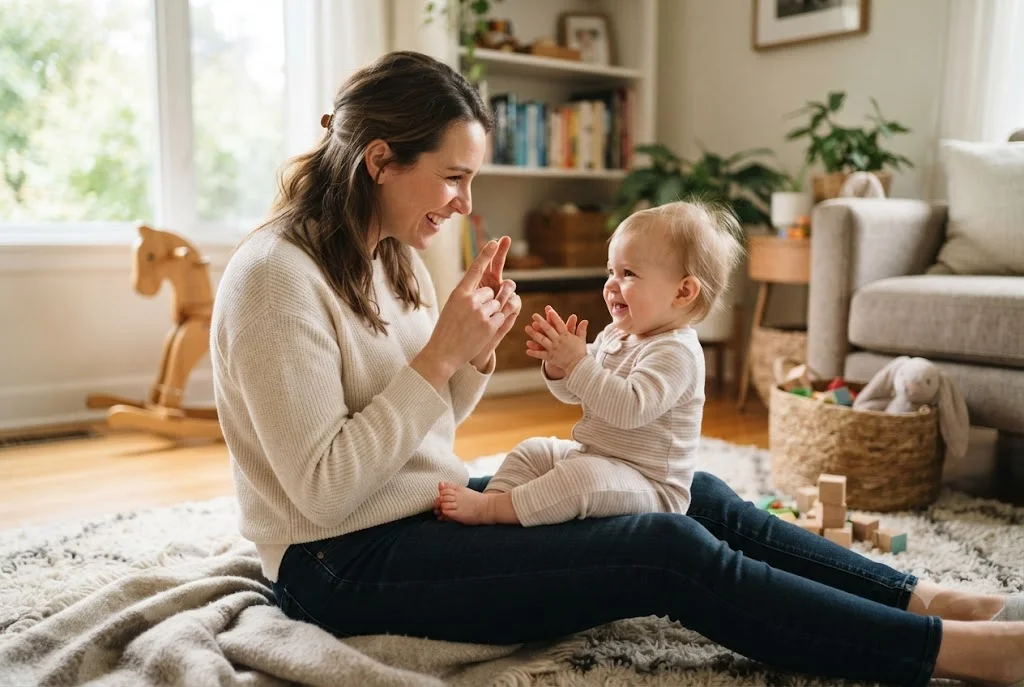
When can babies learn sign language? This question is becoming increasingly popular among parents in the United States who want to support early communication and language development. Babies are capable of learning basic signs much earlier than they can speak, making baby sign language a powerful tool for reducing frustration and strengthening bonding.
In this guide, we’ll explore when babies can start learning sign language, how the process works, and what parents can expect at each stage of development.
What Is Baby Sign Language?
Baby sign language involves teaching simple hand signs to infants before they develop the ability to speak. These signs are often adapted from American Sign Language (ASL) and are used to communicate basic needs like “milk,” “more,” “eat,” or “sleep.”
Although it is not a full language system at this stage, it introduces babies to visual communication and supports early cognitive growth. Understanding the broader context of how sign language is learned in deaf education can help parents appreciate how natural this process is for young learners.
When Can Babies Start Learning Sign Language?
Babies can begin learning sign language as early as 6 months old. At this age, they are developing motor skills and can start recognizing gestures, even if they cannot reproduce them immediately.
Here’s a general timeline:
- 6–8 months: Babies can recognize signs and associate them with meaning.
- 8–10 months: Some babies begin attempting simple signs.
- 10–14 months: More consistent signing begins, often before spoken words appear.
- 14+ months: Vocabulary expands, and signs are used more intentionally.
Every child develops at their own pace, so consistency and repetition are key.
Why Teach Sign Language to Babies?
Teaching sign language to babies offers several developmental benefits. First, it allows them to express needs before speech develops, reducing frustration and tantrums. Second, it strengthens the parent-child bond through interactive communication.
Additionally, early exposure to signs can support overall language development. It does not delay speech—in fact, research suggests it may enhance verbal skills later on.
How Babies Learn Signs: The Learning Process
The sign language learning process for babies mirrors natural language acquisition. It involves observation, repetition, and interaction.
1. Observation
Babies watch caregivers use signs consistently in context.
2. Association
They begin linking signs with objects, actions, or emotions.
3. Imitation
Over time, babies attempt to copy signs using their developing motor skills.
4. Reinforcement
Positive responses encourage continued use and learning.
This process is similar to early sign language learning difficulty levels in older learners, though babies rely more on visual cues and repetition.
Best Signs to Start With
When teaching baby sign language, it’s best to begin with simple, high-frequency words. These include:
- Milk
- More
- Eat
- All done
- Sleep
- Mom/Dad
Use these signs during daily routines so babies can easily connect meaning with action.
Tips for Teaching Baby Sign Language
Consistency and patience are essential. Here are some practical tips:
- Use signs while speaking the word aloud
- Repeat signs during daily activities
- Maintain eye contact and facial expressions
- Encourage attempts without correcting too strictly
- Celebrate small successes
Creating a positive and engaging environment helps babies feel motivated to learn.
Transitioning from Signs to Speech
One common concern is whether sign language delays speech. In reality, most babies naturally transition from signs to spoken words as their verbal skills develop.
Signs often act as a bridge, helping babies understand language structure and meaning before they can articulate words. Over time, spoken language gradually replaces signs, though some children may continue using both.
Role of Parents and Caregivers
Parents play the most important role in early sign language learning. Unlike formal deaf education systems, baby sign language relies heavily on consistent interaction at home.
Caregivers who actively participate in signing create a language-rich environment that supports both visual and verbal communication. This early exposure lays the foundation for lifelong learning and literacy skills.
Modern Tools and Resources
Today, parents have access to a wide range of tools to support baby sign language learning, including:
- Mobile apps with visual demonstrations
- Online video tutorials
- Parenting courses and workshops
- Books with illustrated signs
For expert guidance on early communication development, resources from the CDC developmental milestones program can provide helpful benchmarks.
Common Mistakes to Avoid
While teaching sign language to babies is simple, some common mistakes can slow progress:
- Inconsistency in using signs
- Expecting immediate results
- Introducing too many signs at once
- Lack of repetition
Keeping the process simple and consistent leads to better outcomes.
Conclusion
So, when can babies learn sign language? Most babies are ready to begin around 6 months, with active signing typically developing between 8 and 14 months. With patience, consistency, and daily practice, baby sign language can become a powerful tool for early communication.
By introducing signs early, parents not only reduce frustration but also support cognitive growth and language development. As part of a broader communication journey, sign language offers a meaningful way to connect with your child from the very beginning.