
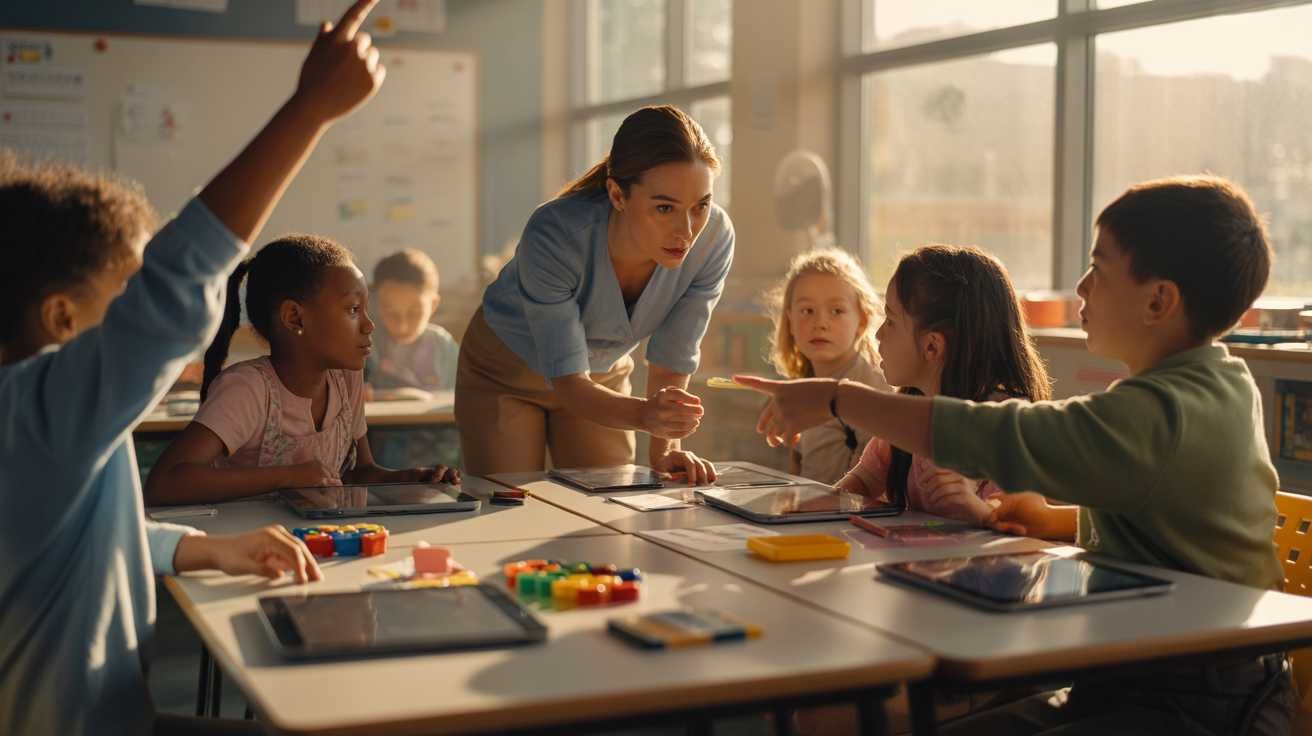
Imagine a classroom where students are not just passive recipients of information but active participants in their learning journey. Picture them engaged in dynamic discussions, collaborating on real-world problems, and applying their knowledge in meaningful ways. This is the power of active learning – a transformative approach that has been proven to enhance student outcomes across various educational settings.
But here’s the catch: traditional teaching methods are rapidly becoming obsolete. In a world where information is at our fingertips and attention spans are dwindling, the old lecture-based model simply doesn’t cut it anymore. Students crave interaction, engagement, and real-world connections. If you’re still relying solely on passive instruction, you’re missing out on a powerful tool that can revolutionize your classroom.
So, how can you harness the power of active learning to boost student achievement? Let’s delve into some proven strategies that can make a significant difference in your teaching effectiveness and your students’ success.
1. Embrace Collaborative Learning
Gone are the days when students sat in isolation, passively absorbing information. Collaborative learning fosters a sense of community and encourages students to learn from one another. By working together on projects, discussions, and problem-solving activities, students develop critical thinking skills and a deeper understanding of the material.
Research has shown that collaborative learning not only improves academic performance but also enhances interpersonal skills and boosts student confidence. In fact, a study by the U.S. Department of Education found that students who engage in collaborative learning environments score higher on academic achievement tests compared to those who work alone.
To implement collaborative learning effectively, consider incorporating group projects, peer reviews, and team-based discussions into your curriculum. Provide clear guidelines and expectations to ensure that all students contribute meaningfully to the group’s success.
2. Implement Problem-Based Learning (PBL)
Problem-Based Learning (PBL) immerses students in real-world challenges, requiring them to apply their knowledge and skills to find solutions. This approach not only enhances critical thinking but also promotes self-directed learning and intrinsic motivation.
In a PBL environment, students take on the role of investigators, exploring complex problems and collaborating with peers to devise innovative solutions. This hands-on approach encourages deeper learning and helps students retain information more effectively.
For example, in a science class, instead of merely reading about environmental issues, students could investigate local pollution problems, collect data, and propose actionable solutions. This experiential learning process makes the content more relevant and engaging.
3. Utilize Flipped Classroom Techniques
The flipped classroom model reverses traditional teaching methods by delivering instructional content outside of class, typically through videos or readings, and using class time for interactive activities. This approach allows students to learn at their own pace and come to class prepared to engage in meaningful discussions and problem-solving exercises.
Flipping the classroom has been shown to increase student engagement and improve academic performance. A study conducted at the University of Michigan found that students in flipped classrooms scored higher on assessments and demonstrated greater mastery of the material compared to those in traditional lecture-based classes.
To implement a flipped classroom, start by identifying key concepts that students can learn independently. Provide them with resources such as instructional videos, readings, or online modules. Use class time for interactive activities that reinforce and apply the concepts learned outside of class.
4. Incorporate Technology to Enhance Learning
In today’s digital age, technology can be a powerful tool to enhance active learning. Interactive simulations, educational apps, and online collaboration platforms can engage students in ways that traditional methods cannot.
For instance, virtual labs allow students to conduct experiments in a controlled environment, providing hands-on experience without the need for expensive equipment. Online discussion forums enable students to collaborate and share ideas beyond the classroom walls, fostering a sense of community and continuous learning.
Moreover, data analytics tools can provide real-time feedback on student performance, allowing educators to identify areas where students may be struggling and intervene promptly. By leveraging technology, educators can create a more personalized and engaging learning experience for their students.
5. Foster a Growth Mindset
Encouraging a growth mindset – the belief that abilities and intelligence can be developed through dedication and hard work – is essential for active learning. Students with a growth mindset are more likely to embrace challenges, persist through difficulties, and view failures as opportunities for growth.
To cultivate a growth mindset, praise effort rather than innate ability, encourage risk-taking and experimentation, and provide constructive feedback that focuses on improvement. Create a classroom environment where mistakes are viewed as a natural part of the learning process, not something to be feared or avoided.
Research by psychologist Carol Dweck has shown that students with a growth mindset achieve higher levels of success and are more resilient in the face of challenges. By fostering this mindset, educators can empower students to take ownership of their learning and strive for continuous improvement.
6. Provide Timely and Constructive Feedback
Feedback is a critical component of active learning. Timely and constructive feedback helps students understand their strengths and areas for improvement, guiding them toward mastery of the content.
Effective feedback is specific, actionable, and focused on the learning objectives. Instead of merely pointing out errors, provide suggestions for how students can improve and encourage self-reflection. This approach not only enhances learning but also promotes a sense of accountability and self-efficacy.
Incorporate regular opportunities for feedback, such as quizzes, peer reviews, and one-on-one conferences. Use this feedback to adjust your teaching strategies and provide additional support where needed.
7. Create an Inclusive Learning Environment
An inclusive learning environment recognizes and values the diverse backgrounds, experiences, and abilities of all students. By embracing diversity, educators can create a more equitable and supportive classroom where every student has the opportunity to succeed.
To foster inclusivity, implement strategies such as differentiated instruction, culturally responsive teaching, and universal design for learning. Provide materials and resources that reflect a variety of perspectives and experiences, and encourage open dialogue about diversity and inclusion.
Studies have shown that inclusive classrooms lead to improved academic outcomes, increased student engagement, and a stronger sense of belonging. By creating an inclusive learning environment, educators can ensure that all students feel valued and supported in their educational journey.
8. Encourage Self-Directed Learning
Self-directed learning empowers students to take control of their own educational experiences. By setting personal goals, seeking out resources, and reflecting on their learning, students develop critical skills that are essential for lifelong learning.
To promote self-directed learning, provide opportunities for students to explore topics of interest, engage in independent research projects, and set personal learning objectives. Encourage reflection through journals, portfolios, or self-assessments, and provide guidance to help students develop effective learning strategies.
Research indicates that self-directed learners are more motivated, more engaged, and achieve higher levels of academic success. By fostering these skills, educators can prepare students for the demands of the 21st-century workforce and lifelong learning.
9. Integrate Real-World Connections
Connecting classroom learning to real-world contexts enhances relevance and motivation. When students see the practical applications of their studies, they are more likely to engage deeply and retain information.
Incorporate field trips, guest speakers, internships, and community projects into your curriculum to provide students with authentic learning experiences. These opportunities allow students to apply their knowledge in real-world settings and gain insights into potential careers and life paths.
For example, a history class could visit a local museum to examine artifacts, or a business class could collaborate with a local company on a marketing project. These real-world connections bridge the gap between theoretical knowledge and practical application, enriching the learning experience.
10. Reflect and Adapt Your Teaching Practices
Continuous reflection and adaptation are key to effective teaching. Regularly assess your teaching strategies and seek feedback from students to identify areas for improvement.
Engage in professional development opportunities, collaborate with colleagues, and stay informed about the latest research and best practices in education. By being open to change and willing to experiment with new approaches, educators can create a dynamic and responsive learning environment that meets the evolving needs of their students.
Remember, the goal is not to implement every strategy at once but to thoughtfully integrate those that align with your teaching philosophy and your students’ needs. Start small, reflect on the outcomes, and adjust as necessary to create an active learning environment that fosters student success.